Upcoming Events
No event available, please check back again, thank you.
Latest Articles
Adult Class Structure At TFC
27 October 2025
A well defined class structure is helpful for both student and trainer. It helps our trainers work together to deliver the learning outcomes we expect to see in all of our members. To do this, we work on a rotating curriculum for each sport, that takes approximately 6 months to cycle through.
It doesn’t matter what stage of the curriculum you enter at, as every class has beginners, intermediate and advanced level learners, and the learning drills are adjusted for each level.
The whole team at TFC is super approachable and up for a chat any time, so bring us all your questions when you’re in the gym, or send us a message anytime!
-
STRIKING CLASSES (Boxing, Muay Thai, MMA Striking)
The term ‘striking’ refers to stand-up combat sports, where punches & kicks (strikes), are permitted. At TFC the striking sports you can learn are Boxing, Muay Thai & MMA Striking.
The foundations of each striking sport always begins with stance and footwork, and each one is different.
A Muay Thai fighter who needs to defend or throw a kick at any moment is not going to stand or move the same as a Boxer who isn’t allowed to kick.
Likewise, an MMA fighter, who for instance, could be taken down to the ground for grappling, needs to learn to measure distance differently than a traditional striking athlete.
It’s important to get the little things right and build good habits from the ground up. So you can expect consistent correction on the basics whenever neccessary, regardless of what level you’re at.
From here, it makes it easier to learn the defensive patterns and offensive patterns for each sport, which are built into the TFC curriculum.
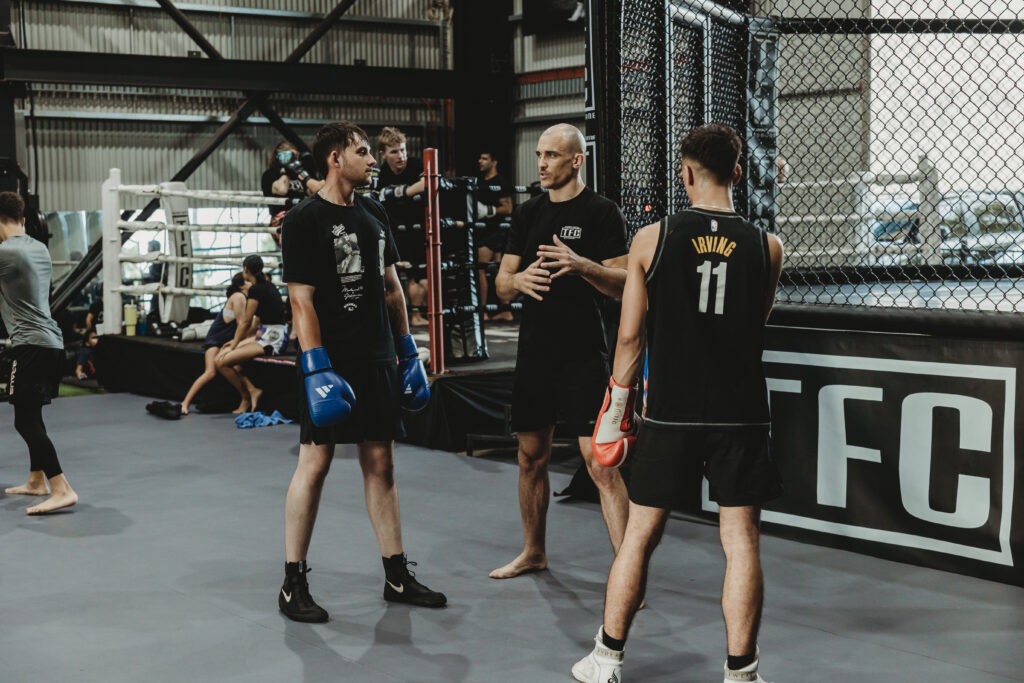
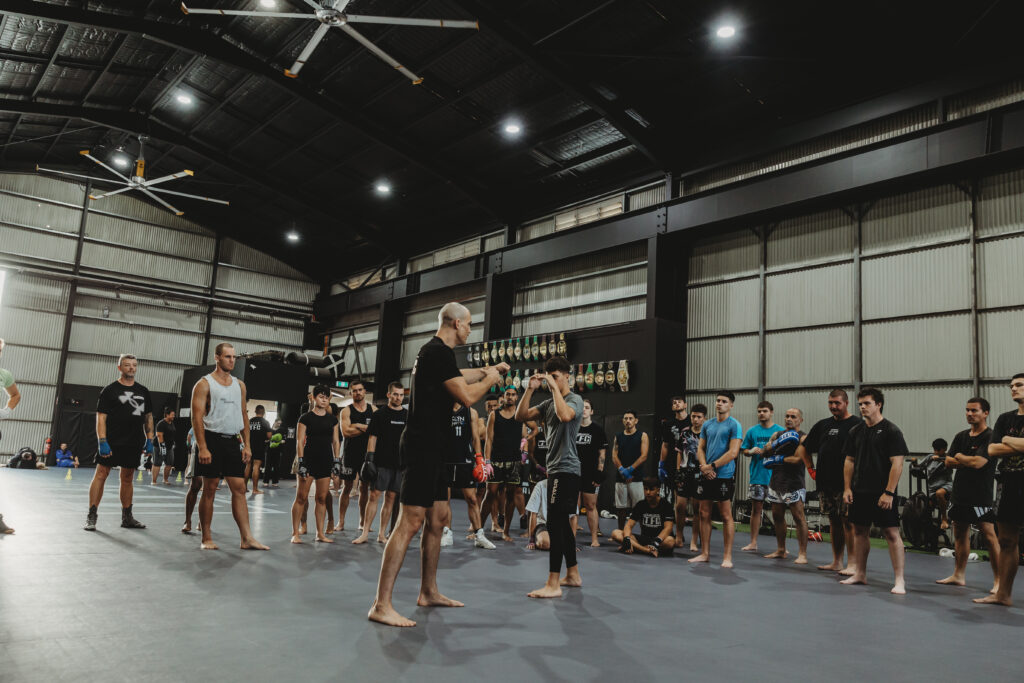
A typical striking class will incorporate –
– an opening (bow in),
– announcement from the trainer on what you’ll be working on,
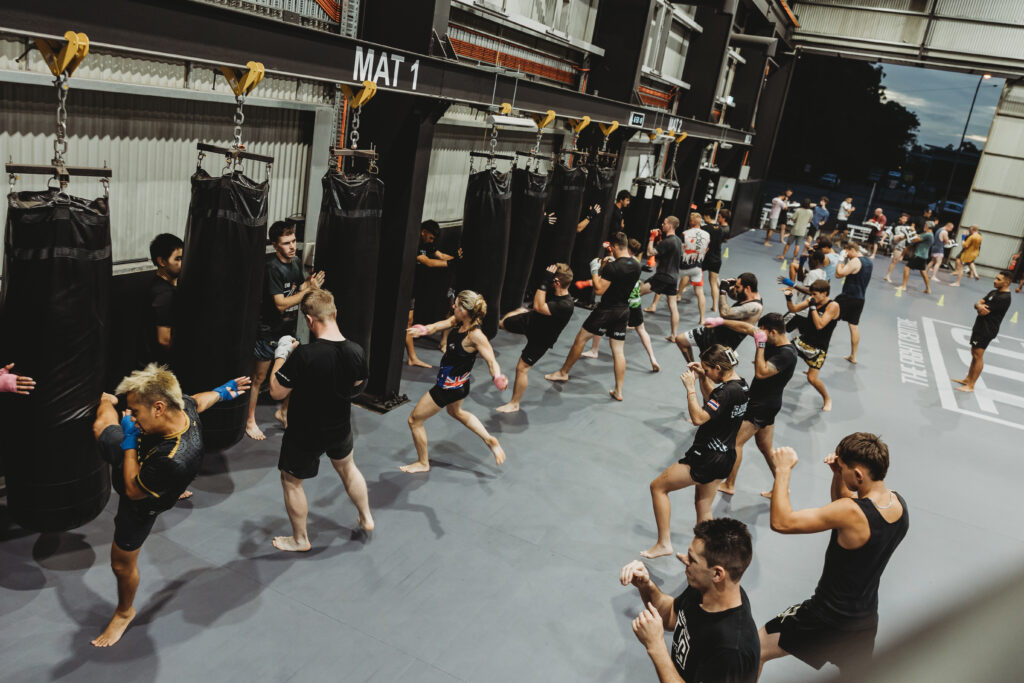
– and a direction to warm up.Over the course of the class the trainer will use different drills to breakdown the technique he/she is teaching you.
The drills could be with a partner, a trainer, on the bag or individually.
Each trainer has their own style of teaching and coaching, and every class is different, so while the objectives remain the same, our trainers are skilled enough to adjust the class content to best serve the students who are there.

-
GRAPPLING SPORTS (BJJ, MMA Grappling)
Grappling sports focus on taking down an opponent and submitting them using different physical holds.
At TFC you can learn traditional BJJ Gi or No Gi, and climb the BJJ belt ranking system.
You can also learn to train MMA Grappling, which is a dynamic style of grappling designed specifically for MMA cage athletes, who are also allowed to use striking, both on their feet and while on the ground or up against the cage.
BJJ classes run for either 60 or 90 minutes, the last half an hour of which, is typically reserved for ‘going live’ – starting from a set position and performing the technique you just learned in real time; this progresses into ‘rolls’ – which is live sparring/grappling with an opponent.
MMA Grappling classes focus on takedowns and wrestling, and MMA students are encouraged to pair this learning with BJJ for an all round grappling skill set.
For students keen on competing in MMA, at TFC, the schedule for this learning combination with our current timetable typically looks like this –
Monday / Tuesday
– 6PM MMA Striking or Muay Thai class
– 7PM MMA Grappling
– 7:30PM BJJWednesday
– 6PM Striking sparring
– 7PM MMA sparring
– 7:30PM BJJ rollsThursday
– 6PM MMA Striking or Muay Thai class
– 7PM MMA Grappling -
SPARRING (Controlled practise fighting)
There’s no better feeling than being able to put together what you’ve learned in class and execute it in a live sparring session.
Tracking the progress of your learning with sparring is the best way to find out where your strengths & weaknesses are.
The biggest sparring sessions of the week at TFC are on Wednesdays, both in the morning, lunchtime and evening sessions.
These sessions are supervised, so you can also receive instruction and feedback from your coaches and trainers in real time.
Sparring is optional, and many of our students choose not to incorporate it into their training routine, this is a totally personal choice.
If you are someone who is training to learn self defence or if you are working toward joining the TFC fight team, or competing at any level, then you should consider sparring a mandatory requirement of your training goals.
Sparring is open to TFC members only. You must have a mouthguard, your own 16oz gloves in good condition, and shin guards for Muay Thai and MMA.
-
BUILDING YOUR TRAINING SCHEDULE
Your training schedule is unique to your lifestyle and personal goals.
If you are someone who wants to learn for a hobby or for other reasons, like confidence and self defence, any class on the TFC timetable is suitable, and you can work this around your daily routine.
However, if you are someone who wants to work toward competition or joining the TFC fight team, you will need to train in the evening program.
Regardless of which one applies to you, consistency over volume should be your first focus. Starting out with a minimum of 2 classes per week is a great habit builder.
Our advice is to set a goal to work towards, this could be grading in Muay Thai, entering your first BJJ competition or jumping into the ring for some technical Boxing sparring.
Once you’ve decided on your goal, work back from there to build out your training schedule, making small adjustments every week.
In combat sports there is always another milestone to reach for and the learning never stops.
OSS!